

Unmanned aircrafts
Unmanned aircrafts, commonly called drones, offer huge potential for developing innovative civil applications in a wide variety of sectors that benefit European society, and will contribute to creating new businesses and jobs.
Within 20 years, the European drone sector is expected to:
- directly employ more than 100,000 people
- have an economic impact exceeding €10 billion per year, mainly in services
SESAR JU published these figures in their European drones outlook study
As civil aviation evolves towards more automation, drone technology will also be crucial for the competitiveness of the European aeronautics industry as a whole. It will also contribute to revolutionize urban mobility and logistic.
In 2014, on the basis of an extensive consultation process, the European Commission adopted a Strategy presented in a Communication to support the development of a drone ecosystem in Europe, while addressing related societal concerns such as safety, security, privacy and environmental protection. This Strategy has been regularly updated (Riga Declaration in 2015, Warsaw Declaration in 2016, Helsinki Declaration in 2017, Amsterdam Declaration of 2018) to take stock of the progress made so far and indicate new priorities. It delivered a European regulatory framework for drone operations. The first set of rules entered into force in 2021, replacing national legislations and creating a European market for drone services. New rules are progressively added to support the development of new applications.
An expert group on drones was established in April 2017. It acts as a sounding board and assists the Commission in the conception and implementation of the EU drone Strategy.
See also DG MOVE website

https://www.euronews.com/2016/08/10/here-come-the-drones
More languages are available.
European safety rules for civil drones
Since 2018, the European aviation safety Basic Regulation applies to all civil unmanned aircraft, irrespective of their weight. It defines high-level rules and essential requirements and empower the European Commission to adopt detailed rules. In order to cope with the wide range of unmanned aircraft, the Commission and EASA have developed a regulatory framework proportionate to the risk of operations. It includes 3 main categories of operations (open, specific and certified and strikes a balance between the obligations of drone manufacturers and operators in terms of safety, respect for privacy, the environment, protection against noise, and security. For example, new drones will have to be individually identifiable, allowing the authorities to trace a particular drone if necessary.
Commission Implementing Regulation (EU) 2019/947 defines the rules and procedures for the operation of unmanned aircraft. The rules will cover each category of operations, from those not requiring prior permission (open category), to those involving certified aircraft and operators, as well as minimum remote pilot training requirements. This Regulation is complemented by AMC and Guidance Material adopted by EASA.
Commission Delegated Regulation (EU) 2019/945 defines the requirements applicable to the unmanned aircraft systems. Its Chapter II defines, in particular, a harmonization legislation (CE marking) defining the requirements that consumer drones must comply with in order to be used in the ‘open’ category of operations, i.e. without the need to obtain a prior authorisation from an aviation authority.
For more information, see FAQ and general information on EASA website
Standards will complement this regulatory framework. ASD-STAN D5WG8 is developing harmonised standards covering the requirements imposed on the consumer drones intended to be operated in the ‘open’ category of operations (EN4709 series). EUROCAE WG-105 develops on its side standards and guidance documents that will allow the safe operation of UAS in all types of airspaces.
U-Space
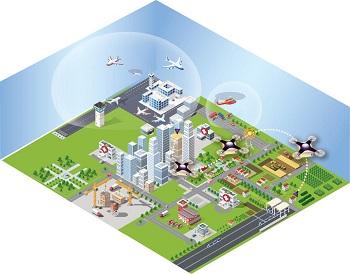
In recent years, the need for a UAS traffic management system (UTM) emerged in many parts of the world. This system will enable the safe operation of a large number of drones at low-altitude (especially in urban areas) as the ATM ensures the safety of aircraft operations at high altitude. The Commission, EASA and SESAR Joint Undertaking are working the development of a UTM concept for Europe, called U-Space. In order to support the development of the U-Space, the Commission has established European Network of U-space Demonstrators.
Commission implementing Regulation (EU) 2021/664 on a regulatory framework for the U-space was adopted of 22 April 2021.
This proposal is based on the following consultation documents:
- consultations on Commission detailed rules on unmanned aircrafts undertaken in 2018
- an EASA Opinion 01/2018 on Unmanned aircraft system (UAS) operations in the ‘open’ and ‘specific’ categories published in Februa ry 2018
- a proposal (NPA 2017-05) for a Commission regulation on UAS operations in the open and specific category published in May 2017
- a ‘Prototype’ Regulation on Unmanned Aircraft Operations and its explanatory note published in August 2016
- a technical opinion on the operation of drones published in December 2015
- a concept of operations for drones
- a proposal for common EU rules for operating drones (A‑NPA 2015-10) issued earlier in 2015
Addressing risks to citizens’ privacy and personal data resulting from drone operations
Drone operations may create several risks to citizens’ fundamental rights to privacy and personal data protection as highlighted in the following opinions and studies
Opinion of the European Data Protection Supervisor of 26 November 2014
Opinion on privacy and data protection issues relating to the utilisation of drones of the article 29 data protection working party adopted on 16 June 2015
Opinion on ethics of security and surveillance technologies (n°28) of the European group on ethics in science and new technologies (EGE)
Data protection and ethical risks in civil RPAS operations
Study on techniques addressing security and privacy aspects of civil operations of drones in Europe
The General Data Protection Regulation applies to drone operations. In addition, privacy and data protection issues have been taken into account in the development of drone regulations. However, rules alone are not enough. They must be made familiar to the drone community and be accessible and understandable to everyone using drones. To this end, the Commission has supported, through the Dornerules.eu project, the development of several tools:
Privacy and data protection e-course for drone professionals
Data Protection Impact Assessment (DPIA) Template

Studies
- European drones outlook study - unlocking the value for Europe
The SESAR joint undertaking conducted this study in order to assess the development of drones' operations drones within European skies.
- Demonstrating RPAS integration in the European aviation system
This report provides a summary of the results of the drone demonstration projects launched by SESAR JU in 2013.
- Study on techniques addressing security and privacy aspects of civil operations of drones in Europe
The purpose of this report, prepared by the JRC, is to provide an overview and an evaluation of techniques able to support 3 main functions needed in the design and deployment of drones in Europe. The 3 functions are transparency of drones’ operations, 4-D geofencing and minimisation of the collected data. The report provides recommendations on the most feasible technologies or gaps to be filled to support regulatory and standardisation activities for drone operations in Europe.
full report (2017) (3 MB)
- Civil drones in society
To support the development of responsible and socially beneficial strategies for civil drones, the JRC has undertaken several initiatives. The study on the societal and ethics aspects of RPAS explores policy developments, consultations, and research projects in Europe and beyond. It also offers a critique of aspects of the development strategy, grounded in the concept of responsible research and innovation.
- Ethics dialogues
In a second initiative, the JRC investigated the benefits of engaging dialogues with citizens on the ethical dimensions of different new technologies including drones.
- ‘You wouldn’t have your granny using them’: Drawing boundaries between acceptable and unacceptable applications of civil drones
In this article, Philip Boucher reported the results of public engagement activities conducted by the JRC to explore citizens’ visions of civil drones. Several insights counteracted the prevalent assumptions. There is no blanket support for or opposition to civil drones. He found that citizens make nuanced decisions about the acceptability of civil drones depending upon the purpose of the flight and the actors involved. The results support calls to strengthen the role of citizens in civil drone development. In particular, to shift away from the current focus on citizens’ acceptance of civil drone development towards the development of civil drones that are acceptable to citizens.
- Third-party liability and insurance requirements of RPAS
Despite efforts undertaken to ensure the safety of RPAS operations, accidents may happen and victims need to be compensated for any injury or damage caused by the operation of an RPAS. This study investigates the efficiency of the existing regulatory framework and makes recommendations for improvements.
- Data protection and ethical risks in civil RPAS operations
This study analyses the privacy, data protection and ethical risks posed by civil RPAS applications and makes recommendations to mitigate them.
executive summary for the industry
proceedings from 1st workshop
proceedings from 2nd workshop